






























Centralised venues ranked on custody, liquidity, cost and regulatory standing.






15 compared · checked August 2026All 15 →
Topics
Latest
Exchanges & trading
Custody & wallets
Yield & lending
DeFi & infrastructure
NFT & consumer
Business services
Exchanges, wallets, staking, lending, bridges and DeFi protocols, each scored against a published rubric and re-checked on a stated date. The marks behind every score are on its review page.
Best in category on the evidence we can verify.
Recommendable to most readers, with stated caveats.
Works well for a specific use case, weaker outside it.
Usable, but there are better options for most people.
Real drawbacks; only for readers who need this one feature.
We would not put our own funds through it.
Centralised venues ranked on custody, liquidity, cost and regulatory standing.
Non-custodial spot venues ranked on execution quality, audits and liquidity.
On-chain derivatives venues ranked on risk engine, depth and funding costs.
 Hyperliquid8.5/10
 dYdX8.4/10
 Jupiter Perps7.6/10
Swap services ranked on true spread, KYC policy and refund conduct.
 FixedFloat7.4/10
 SideShift.ai7.4/10
 Trocador7.4/10
Charting, analytics and execution tooling ranked on data quality and cost.
 DefiLlama9.2/10
 TradingView9.1/10
 DEX Screener8.5/10
Signing devices ranked on secure element, firmware openness and recovery design.
 BitBox028.9/10
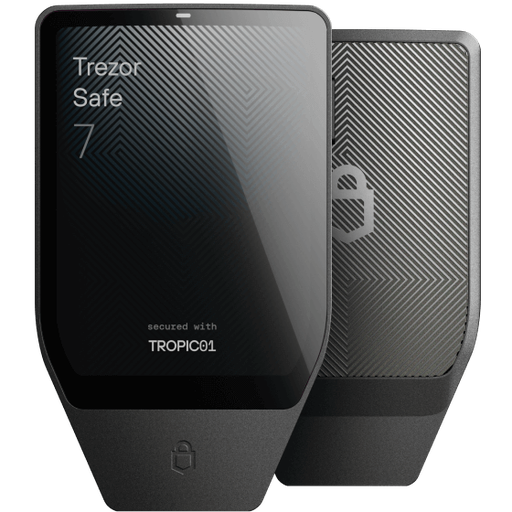 Trezor Safe 58.8/10
 Keystone 3 Pro8.7/10
Software wallets ranked on key handling, audits and transaction transparency.
 Rabby9.1/10
 Safe8.8/10
 Sparrow Wallet8.5/10
Validators and staking services ranked on uptime, slashing history and fees.
 Chorus One8.6/10
 Allnodes8.5/10
 Figment8.5/10
LST issuers ranked on decentralisation, peg behaviour and withdrawal design.
 Rocket Pool8.7/10
 Marinade8.5/10
 Jito8.3/10
LRT issuers ranked on added slashing risk, transparency and exit liquidity.
 ether.fi7.9/10
 EigenLayer7.6/10
 Puffer Finance7.6/10
Vault platforms ranked on strategy disclosure, audits and net-of-fee yield.
 Pendle8.6/10
 Convex Finance8.5/10
 Morpho Vaults8.4/10
Lending markets ranked on collateral policy, oracle design and loss record.
Blue-chip protocols ranked on security record, governance and real usage.
 Aave Protocol9.2/10
 Uniswap Protocol9.1/10
 Morpho Protocol8.7/10
Bridges ranked on trust assumptions, exploit history and settlement speed.
 Across Protocol8.9/10
 Circle CCTP8.9/10
 IBC8.9/10
Stablecoins ranked on reserve quality, attestations, peg record and redemption.
 Pax Dollar9.0/10
 USDC9.0/10
 Circle EURC8.9/10
Marketplaces ranked on custody of assets, fee clarity and royalty policy.
 Magic Eden8.1/10
 OpenSea8.1/10
 Manifold7.8/10
Analytics and creation tools ranked on data accuracy, pricing and lock-in.
 CryptoSlam8.6/10
 Dune NFT Dashboards8.4/10
 DappRadar8.2/10
Cards ranked on true all-in cost, issuer stability and jurisdiction coverage.
 Coinbase Card7.7/10
 Crypto.com Visa Card7.4/10
 Bitpanda Card7.3/10
Advisory firms ranked on published research, client-confirmed work and conflict disclosure.
 Gauntlet8.6/10
 LlamaRisk7.6/10
 Tokenomics.net7.1/10
| # | Category | Best for | |||
|---|---|---|---|---|---|
| 1 | Aave Protocol#1 in category | DeFi Protocols | 9.2/10 | Credit infrastructure the rest of DeFi builds on | August 2026 |
| 2 | DefiLlama#1 in category | Crypto Trading Tools | 9.2/10 | Honest, free DeFi data | August 2026 |
| 3 | Rabby#1 in category | Self-Custody Wallets | 9.1/10 | EVM users who want to see what they are signing | August 2026 |
| 4 | TradingView#2 in category | Crypto Trading Tools | 9.1/10 | Charting, alerts and broker-connected execution | August 2026 |
| 5 | Uniswap Protocol#2 in category | DeFi Protocols | 9.1/10 | The most proven piece of infrastructure in DeFi | August 2026 |
| 6 |  Aave#1 in category | Crypto Lending Platforms | 9.0/10 | The safest large lending market in DeFi | August 2026 |
| 7 | Pax Dollar#1 in category | Stablecoins | 9.0/10 | Regulated dollars with a long, quiet record | August 2026 |
| 8 | USDC#2 in category | Stablecoins | 9.0/10 | The best-documented dollar token in crypto | August 2026 |
| 9 | Across Protocol#1 in category | Cross-Chain Bridges | 8.9/10 | Fast, cheap EVM transfers with relayer-borne risk | August 2026 |
| 10 | BitBox02#1 in category | Hardware Wallets | 8.9/10 | The best balance of open firmware and usability | August 2026 |
| 11 | Circle CCTP#2 in category | Cross-Chain Bridges | 8.9/10 | Moving USDC without a wrapper | August 2026 |
| 12 | Circle EURC#3 in category | Stablecoins | 8.9/10 | Euro exposure on-chain | August 2026 |
| 13 | IBC#3 in category | Cross-Chain Bridges | 8.9/10 | Trust-minimised transfers within Cosmos | August 2026 |
| 14 |  PayPal USD#4 in category | Stablecoins | 8.9/10 | A stablecoin with a mainstream payments company behind it | August 2026 |
| 15 |  Uniswap#1 in category | Decentralised Exchanges | 8.9/10 | Deep, dependable swaps on Ethereum and its L2s | August 2026 |
| 16 | Safe#2 in category | Self-Custody Wallets | 8.8/10 | Shared treasuries and serious personal custody | August 2026 |
| 17 | Trezor Safe 5#2 in category | Hardware Wallets | 8.8/10 | Open-source purists who want a modern screen | August 2026 |
| 18 | Keystone 3 Pro#3 in category | Hardware Wallets | 8.7/10 | Air-gapped multi-chain signing | August 2026 |
| 19 | Morpho Protocol#3 in category | DeFi Protocols | 8.7/10 | Minimal, immutable lending infrastructure | August 2026 |
| 20 | Rocket Pool#1 in category | Liquid Staking Protocols | 8.7/10 | Decentralised Ethereum staking with permissionless operators | August 2026 |
| 21 |  Trezor Safe 3#4 in category | Hardware Wallets | 8.7/10 | Cheapest route to open firmware plus a secure element | August 2026 |
| 22 | Chorus One#1 in category | Staking Providers | 8.6/10 | Research-led validation across many chains | August 2026 |
| 23 | CryptoSlam#1 in category | NFT & AI Tools | 8.6/10 | Volume data with wash trading stripped out | August 2026 |
| 24 | Gauntlet#1 in category | DeFi Strategy & Protocol Economics Advisors | 8.6/10 | Lending and DEX protocols needing parameter and incentive optimization | 22 Sept 2026 |
| 25 | Pendle#1 in category | Yield Aggregators | 8.6/10 | Fixing a yield rate or trading it separately | August 2026 |
| 26 | Allnodes#2 in category | Staking Providers | 8.5/10 | Running your own validator without running servers | August 2026 |
| 27 | Convex Finance#2 in category | Yield Aggregators | 8.5/10 | Boosted Curve yields without locking CRV | August 2026 |
| 28 |  deBridge#4 in category | Cross-Chain Bridges | 8.5/10 | Fast cross-chain swaps with no wrapped assets | August 2026 |
| 29 | DEX Screener#3 in category | Crypto Trading Tools | 8.5/10 | Real-time DEX pair monitoring | August 2026 |
| 30 | Figment#3 in category | Staking Providers | 8.5/10 | Institutional staking with reporting to match | August 2026 |
Five or six criteria, each with a stated weight; the weights sum to 100. 106 criteria across 19 categories.
Scored against documented evidence — filings, audits, fee schedules, incident records. 1,590 individual marks so far.
The headline number is the weighted mean of those marks. Nothing is scored by impression, and two services in a category are always measured on the same list.
| Criterion | Weight | Mark | Adds |
|---|---|---|---|
| Security & custody | 25% | 9.0 | 2.25 |
| Regulatory standing | 20% | 9.5 | 1.90 |
| Liquidity & depth | 20% | 8.5 | 1.70 |
| Cost | 15% | 6.0 | 0.90 |
| Asset range | 10% | 7.5 | 0.75 |
| Support & UX | 10% | 8.5 | 0.85 |
| Weighted mean | 8.4/10 | ||
Every category page prints its own rubric this way, and every review shows the mark it got on each line.
Reviews are published under the OBOL Desk byline and edited by three named editors, each on a beat.