What Is DeFi? A Beginner's Guide to Decentralized Finance
A first-principles map of decentralized finance — the building blocks, the big protocol categories, and the honest risks — before you send a single transaction.
Dario FennDeFi & Markets Lead · DeFi protocols, yield, market structure and on-chain dataUpdated 12 May 2026
The short answer
DeFi is financial services — trading, lending, derivatives — built as public smart contracts rather than operated by an institution, usable from a wallet you control. The yield comes from borrower interest, trading fees, staking issuance or printed tokens, and only the first three persist. The real risks are contract bugs, oracle manipulation, governance changes and your own custody.
DeFi — short for decentralized finance — is the umbrella term for financial services built on public blockchains that operate without a bank, broker or clearing house standing in the middle. Lending, borrowing, trading, earning yield, even insurance: all of it exists in DeFi, running on code that anyone can inspect and that nobody can unilaterally switch off. For a beginner, the ecosystem can look like an alphabet soup of protocols, but the underlying idea is simple enough to grasp in one sitting, and that's the goal of this guide — a map before you start exploring the territory.
The Core Idea: Money Without a Middleman
In traditional finance, nearly every transaction passes through an institution that verifies you're good for it, holds the asset, and takes a cut for the privilege. DeFi replaces that institution with a smart contract — self-executing code deployed on a blockchain, most commonly Ethereum, that enforces the rules automatically. Want to borrow against your crypto? A lending protocol like Aave holds your collateral and releases the loan the moment the contract's conditions are met, no loan officer required. Want to swap one token for another? A decentralized exchange executes the trade against a pool of liquidity rather than routing your order to a market maker. The appeal is transparency and access — the code is public, and anyone with a wallet and an internet connection can use it, regardless of where they live or what a bank thinks of their credit history.
It's worth putting a number on how far this has come. Total value locked across DeFi protocols — a rough measure of how much capital is deposited into these smart contracts — has swung from under a billion dollars in early 2020 to well over $100 billion at various points since, and back down again through bear markets, illustrating both the genuine growth of the sector and how closely its usage still tracks the broader crypto market's mood rather than moving independently of it.
The Building Blocks You'll Actually Use
Almost everything in DeFi is a variation on a handful of primitives. Decentralized exchanges (DEXs) like Uniswap let you swap tokens directly from your wallet. Lending markets like Aave or Compound let you deposit assets to earn interest, or borrow against collateral you've already deposited. Stablecoins — tokens pegged to a fiat currency, usually the dollar — are the working capital of the whole system, letting you hold value without leaving the crypto rails or exposing yourself to price swings while you decide what to do next. Layer these together and you get more complex products: yield aggregators that shuffle your deposits between protocols chasing the best rate, or derivatives platforms that let you take leveraged positions without a centralized counterparty.
Automated market makers, briefly
Most DEXs don't match buyers with sellers the way a traditional exchange does. Instead, they use an automated market maker (AMM) model: liquidity providers deposit a pair of tokens into a shared pool, and a formula — commonly x*y=k in Uniswap's original design — sets the price based on the ratio of tokens in that pool. Trade against it, and the ratio shifts, which shifts the price for the next trader. It's an elegant solution to the cold-start problem of needing buyers and sellers ready at every price point, and it's the single most important design pattern to understand if you plan to go beyond simple swapping.
Concentrated liquidity, an innovation popularised by Uniswap v3, refined this further by letting liquidity providers choose a specific price range to supply within rather than spreading their capital across the entire curve from zero to infinity. It makes capital dramatically more efficient — a provider can earn the same fees with a fraction of the deposit if prices stay within their chosen range — but it also means providers now have to actively manage a position rather than deposit and forget, which is a meaningfully different risk and effort profile than the earliest AMM designs.
Yield: Where It Comes From and Why It Isn't Magic
The yields advertised across DeFi look nothing like a savings account, and it's worth knowing exactly why before you chase them. Some yield is genuinely earned — interest paid by borrowers in a lending pool, or trading fees paid by swappers to liquidity providers in a DEX pool. Some yield is inflationary — a protocol printing its own governance token and handing it out to anyone who deposits, which juices the headline percentage but dilutes the token's value at the same rate it's being distributed. And some yield, frankly, is a subsidy designed to bootstrap usage before the incentive programme ends and the number quietly drops. None of this makes DeFi yield worthless, but it does mean the first question worth asking about any double-digit APY is simple: where, specifically, is this coming from?
A good habit is to break any advertised yield into its components before committing capital: how much is base protocol revenue, how much is token emissions, and what happens to the number once those emissions taper off, as they eventually do on almost every protocol that uses them to bootstrap growth. Protocols that are upfront about this breakdown in their own documentation are, generally, a better sign than ones that simply publish a single blended APY and leave you to guess.
Self-Custody Changes the Risk Profile
The flip side of removing the middleman is that the middleman was also, for better or worse, a backstop. There's no DeFi customer support line to call if you send funds to the wrong address, approve a malicious contract, or mismanage your own private keys. Self-custody means you are the bank, with all the freedom and all the responsibility that implies. This is the single biggest mental shift for anyone coming from traditional finance, and it's worth internalising before you move meaningful sums — start with amounts you'd be comfortable losing entirely while you learn the mechanics of wallets, gas fees and transaction approvals.
The Honest Risks
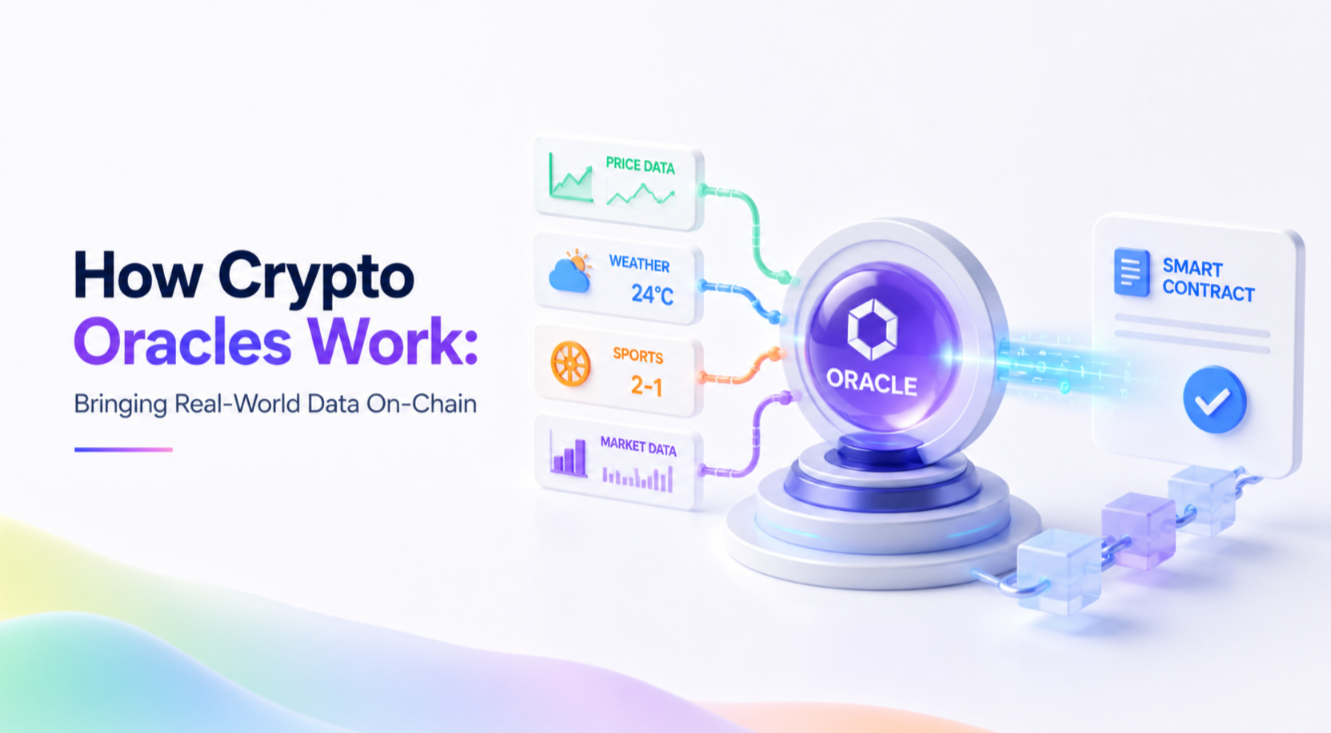
Smart contract risk sits at the top of the list — even audited protocols get exploited, because audits reduce risk rather than eliminate it. Oracle risk is close behind, since many protocols rely on external price feeds, and a manipulated or lagging oracle has been the root cause of several high-profile hacks. If you provide liquidity to an AMM pool, you'll also want to understand impermanent loss — the way a pool's value can lag simply holding the two assets separately when their prices diverge, a mechanic that catches out a lot of newcomers chasing a headline fee yield without reading the fine print. And then there's plain governance risk: many protocols can have their parameters changed by a token vote, which means the rules you signed up for aren't necessarily fixed forever.
Bridge risk deserves its own mention, since moving assets between chains — a near-constant activity in a multi-chain DeFi landscape — has produced some of the largest single exploits in the industry's history, precisely because bridges concentrate enormous value behind a comparatively small and often experimental piece of code. Treat cross-chain bridging as a distinct risk decision from the DeFi activity you're bridging funds to use, not an incidental step.
A Sensible First Step Into DeFi
Rather than starting with the highest-yield opportunity you can find, start with the most battle-tested. Protocols that have operated for years, survived multiple market cycles and carry a long track record without a major exploit — think the largest lending markets and DEXs by sustained volume rather than the newest fork with an eye-catching APY — are the sensible place to learn the mechanics. Use a hardware wallet or at minimum a dedicated browser wallet you understand fully. Read what you're approving before you sign a transaction; a blind 'confirm' is how most DeFi losses actually happen, far more often than an exotic hack.
Keep position sizes small until the workflow — connecting a wallet, approving a token, executing a swap, checking a transaction on a block explorer — feels routine rather than nerve-wracking. That familiarity is worth more than any yield you might miss while you build it.
DeFi's real promise isn't that it makes you rich faster than traditional finance — plenty of people have lost money assuming that. It's that it makes financial infrastructure programmable, transparent and open to anyone, which is a genuinely different value proposition from a bank account. Approach it as you would any new financial system: understand the mechanics before the money, and let the yield be a byproduct of that understanding rather than the reason you showed up.
FAQ
What is DeFi?+
Financial services — trading, lending, derivatives — built as public smart contracts rather than operated by an institution, so anyone can use them from a wallet they control.
Where does DeFi yield come from?+
Interest paid by borrowers, fees paid by traders, staking issuance, or tokens printed as incentives. The first three persist; the last ends when the programme does.
Is DeFi safe?+
The main risks are contract bugs, oracle manipulation, governance changes and your own custody. Time in production and audit scope tell you more than any headline rate.
How should a beginner start with DeFi?+
With a small amount, on an established protocol, in a single-asset position rather than a leveraged or liquidity-providing one, from a wallet holding only what you can afford to lose.
 Dario FennDeFi & Markets Lead · DeFi protocols, yield, market structure and on-chain data