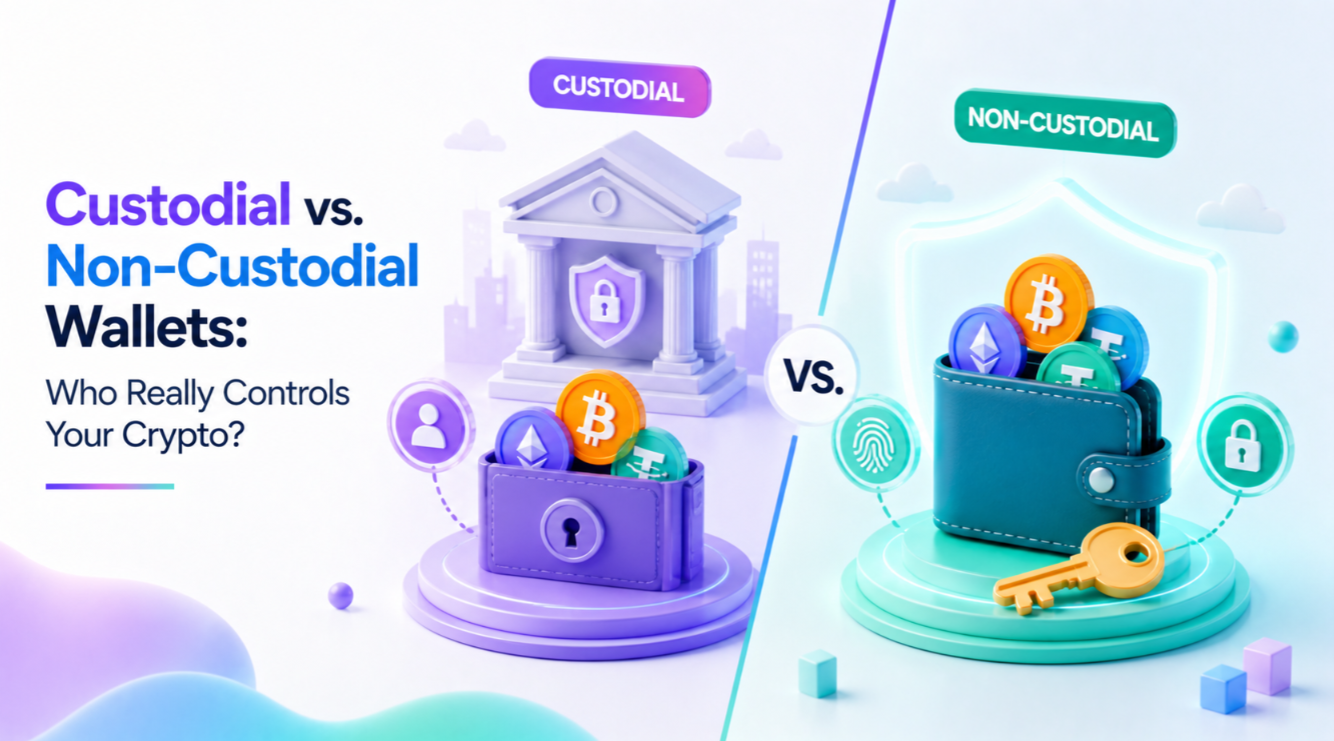
Custodial vs. Non-Custodial Wallets: Who Really Controls Your Crypto?
A myth-busting look at the difference between letting an exchange hold your keys and holding them yourself, with the real-world collapses that made the distinction matter.
Selin AydinSecurity Editor · Crypto security, custody, exploits and smart-contract riskUpdated 29 July 2026
The short answer
With a custodial wallet a company holds the keys and you hold a claim against that company. With a non-custodial wallet you hold the keys, so nobody can freeze, lend or lose your assets — and nobody can restore access if you lose the backup. The practical answer is to split by purpose: a small working balance where convenience matters, holdings where no counterparty exists.
Ask ten crypto holders who controls their coins and most will say "I do." Check where those coins actually sit, and a large share of them are wrong. The custodial versus non-custodial split is the most consequential distinction in crypto ownership, and it's routinely glossed over until something goes wrong — often at exactly the moment it matters most.
The basic distinction
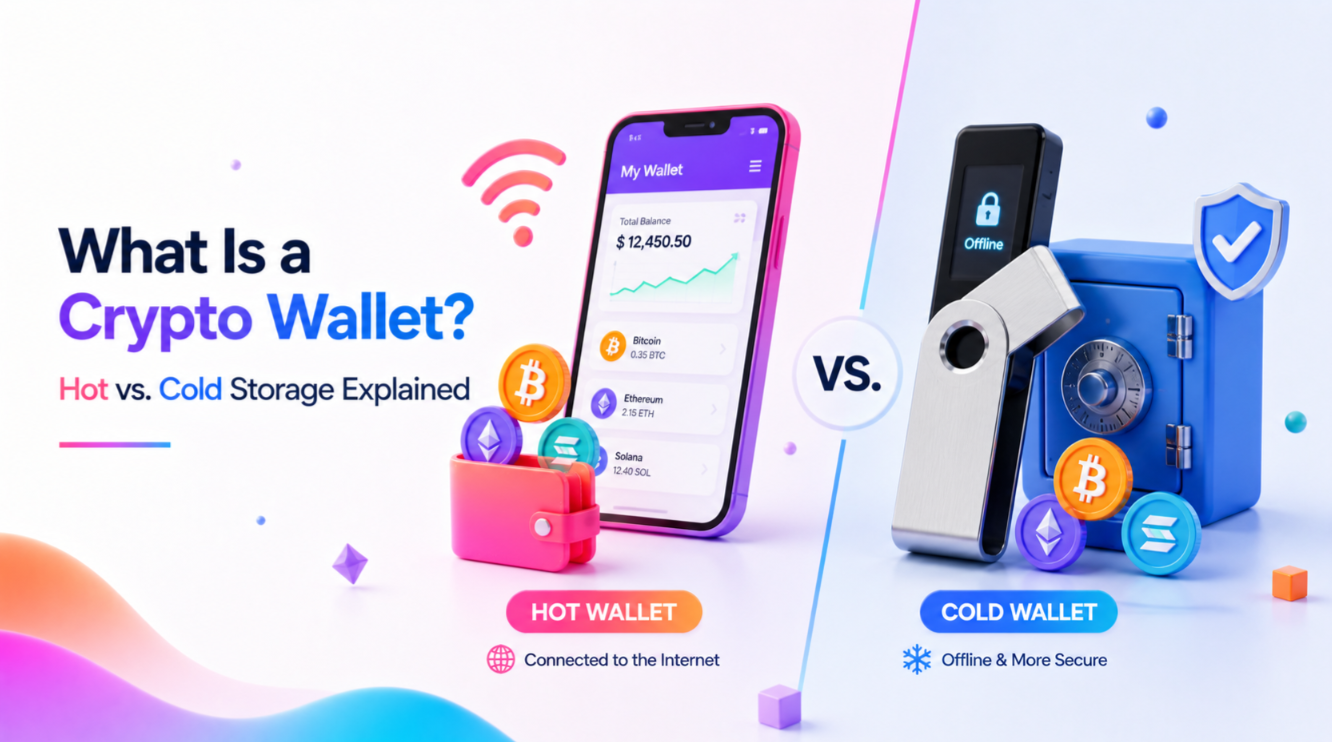
Custodial means a third party — typically an exchange like Coinbase or Binance — holds the private keys to your crypto on your behalf. You see a balance in an app, you can trade and withdraw, but the underlying keys sit on that company's servers, not yours. Non-custodial means you hold the private keys yourself, in a wallet only you control, whether that's a mobile app, a browser extension, or a hardware device that never connects the key itself to the internet.
The distinction sounds abstract until you remember what a private key actually is: cryptographic proof of ownership. Whoever holds it controls the funds, full stop. A custodial balance is really an IOU — a promise from the exchange that it will let you withdraw the equivalent amount when you ask, backed by whatever assets the exchange actually holds in reserve behind the scenes, which you generally cannot verify yourself in real time.
Why custodial exists, and why people use it
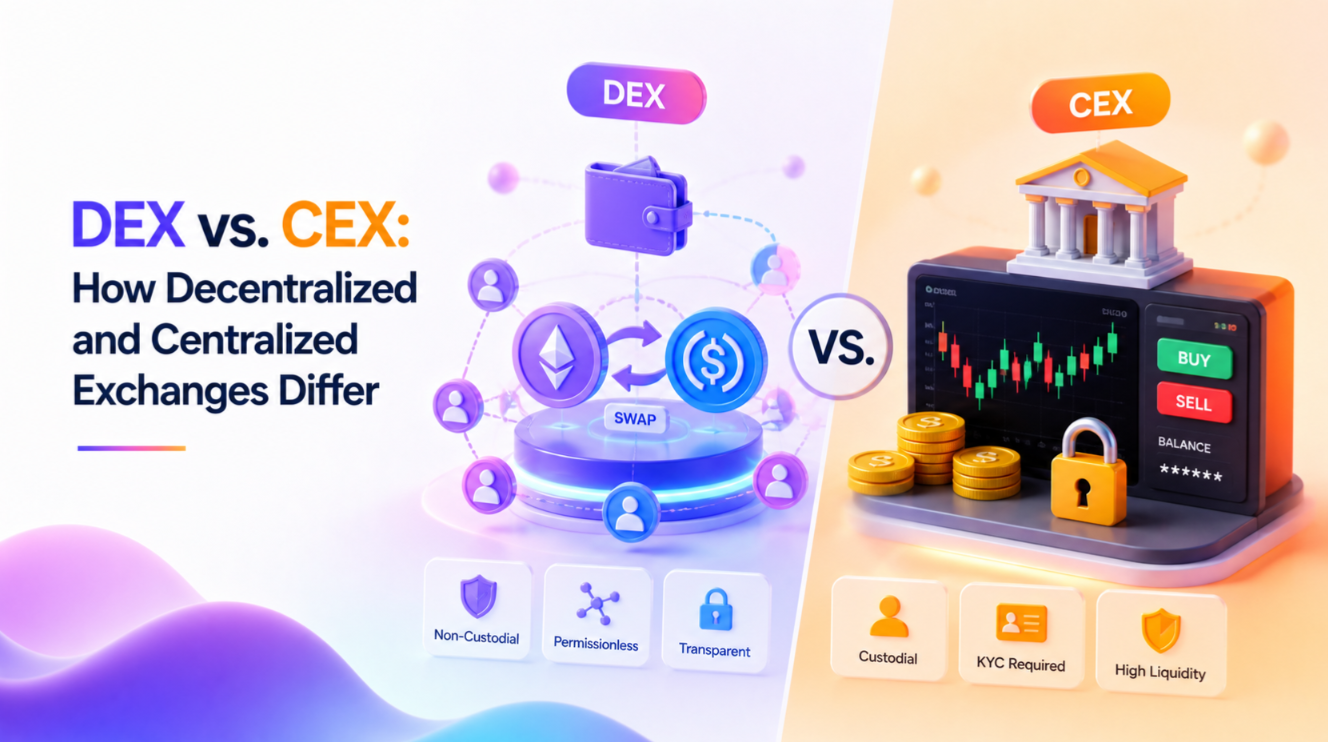
Custody isn't a scam or a mistake; it's a genuine convenience trade. Exchanges handle key management, recovery if you forget a password, customer support, and instant conversion between crypto and fiat currency — none of which self-custody offers out of the box. For a newcomer buying their first hundred pounds of Bitcoin, custodial is the sensible on-ramp: lower complexity, lower risk of a self-inflicted mistake like sending funds to the wrong address or losing a seed phrase before understanding what it even is.
Custodial platforms also make certain things possible that pure self-custody doesn't: instant trading against deep order books, fiat withdrawals to a bank account, tax reporting tools, and account recovery through identity verification if you lose access. These aren't trivial conveniences, and they're a large part of why even experienced holders keep some funds on regulated exchanges rather than moving everything to self-custody on principle.
Where custodial risk actually bites
The risk isn't theoretical. FTX collapsed in November 2022 holding roughly $8 billion in customer funds that had been commingled with a sister trading firm and largely couldn't be returned. Celsius and Voyager failed the same year, freezing customer withdrawals for months before bankruptcy proceedings began, leaving depositors waiting years to learn what fraction of their funds, if any, they'd eventually recover. In every case, the technical failure was identical: users held a custodial balance, not the underlying keys, and when the custodian's business failed, users became unsecured creditors standing in line with everyone else, not owners retrieving their own property.
This is the origin of the crypto proverb "not your keys, not your coins." It's not a slogan about ideology — it's a description of what a legal claim on a bankrupt custodian actually looks like versus a private key you control directly. A bankruptcy court doesn't treat a crypto exchange deposit the way it treats a bank deposit with government-backed insurance; there is, in most jurisdictions, no equivalent protection.
What non-custodial actually buys you
Move funds into a non-custodial wallet and no company's solvency, hacking incident, or regulatory freeze can touch them. Nobody can lock your account, reverse your withdrawal, or go bankrupt with your coins inside their balance sheet, because there is no balance sheet involved — just an address on a public ledger that only your key can move. This is the property crypto was originally built to offer, and custodial services, however convenient, quietly hand it back to a third party in exchange for ease of use.
The tradeoffs non-custodial doesn't advertise
Self-custody isn't strictly safer, it's differently risky. Lose your seed phrase with no backup, and there's no customer support line to call — the funds are unrecoverable, permanently, no matter how much you can prove the wallet was once yours. Send a transaction to the wrong address, and there's no reversal, no chargeback, no fraud department to appeal to. Fall for a phishing site that tricks you into signing a malicious transaction, and you've authorised the theft yourself, with a signature nobody can dispute after the fact. Custodial exchanges absorb a meaningful amount of this operational risk on your behalf; non-custodial wallets hand it entirely to you, along with the control.
A sensible way to split the decision
Few experienced holders are purists in either direction. A common approach: keep an amount on a reputable, regulated exchange sized for active trading and short-term needs, and move anything you intend to hold for the long term into a non-custodial wallet — ideally a hardware one — as soon as practical. Treat the exchange balance the way you'd treat cash in a current account, and the self-custodied balance the way you'd treat assets in a safe deposit box: accessible when needed, but not something you're carrying around day to day.
Questions worth asking before you trust a custodian
Is the exchange regulated in a jurisdiction with meaningful oversight, and has it held that licence for long enough to have a track record? Does it publish proof-of-reserves audits, and do those audits come from a credible third party rather than a marketing document with no independent verification behind it? Has it ever paused withdrawals, even briefly, during volatile markets — a pattern that often precedes deeper trouble rather than resolving it? None of these questions guarantee safety, but a custodian that fails several of them is telling you something about how it would behave under stress, well before the stress actually arrives.
The middle ground: custodial with better guarantees
It's worth noting the field isn't purely binary in practice. Some newer custodial products offer segregated, audited cold storage, insurance on a portion of held assets, or qualified custodian status under securities regulation — meaningfully better guarantees than a standard exchange balance, even though the fundamental fact remains that a third party still holds the keys. These are worth knowing about as an intermediate option, though they don't erase the core tradeoff, only soften it.
There's no universally correct answer between custodial and non-custodial — only a mismatch between the choice you've made and the choice your risk tolerance actually calls for. Know which one you're using for each pound of exposure, and you've already avoided the mistake that sank a great many FTX depositors: assuming a balance on a screen was the same thing as ownership.
Reading the fine print you probably skipped
Most exchange terms of service explicitly state that assets on the platform aren't held in a trust structure that guarantees their return in insolvency — it's usually written in language dense enough that almost nobody reads it before clicking accept. It's worth actually finding that clause for any exchange holding a meaningful sum on your behalf, because it tells you in plain terms exactly what you're relying on: the company's ongoing solvency, and nothing more legally binding than that.
The verdict, if you need one
If forced to choose a single working rule, it's this: use custodial exchanges as a transaction layer, not a savings account, and treat self-custody as the default home for anything you're not actively trading. That's a generalisation, and every generalisation has exceptions worth weighing for your own circumstances, but it's the rule that would have protected the largest share of people caught out by the last cycle's custodial failures, and it costs nothing to follow beyond the modest inconvenience of managing a wallet yourself.
FAQ
What is the difference between custodial and non-custodial wallets?+
A custodian holds the keys and you hold a claim against them. Non-custodial means you hold the keys, so no one can freeze or lend your assets — and no one can restore access if you lose them.
Is a custodial wallet safe?+
It depends on the custodian's solvency, its jurisdiction, and whether client assets are legally segregated. Those are contract and regulation questions rather than technical ones.
What happens to my crypto if an exchange fails?+
It depends on whether assets were held on trust and segregated. Where they were not, customers rank as unsecured creditors and recover whatever the estate distributes, often years later.
Should I use one or the other?+
Split by purpose. A small balance on a custodial platform for trading and fiat access, and long-term holdings in self-custody where no counterparty exists.
 Selin AydinSecurity Editor · Crypto security, custody, exploits and smart-contract risk