Maker-Taker Fees: The Number Exchanges Don't Advertise
The headline fee on an exchange's marketing page is the maker rate at a volume tier you will never reach. Here is what you actually pay.
Dario FennDeFi & Markets Lead · DeFi protocols, yield, market structure and on-chain dataUpdated 6 September 2026
The short answer
A maker order adds liquidity to the book and is charged less; a taker order removes liquidity immediately and is charged more. Published rates are tiered by 30-day volume, often discounted for holding the exchange's token, and quoted at the best tier. For most retail traders the effective cost is the taker rate plus the bid-ask spread, and the spread is usually the larger of the two.
Every exchange fee page opens with a small number. It is almost always the maker fee at the highest volume tier, for a trader moving eight or nine figures a month. The number that applies to you sits several rows down, and the cost that actually determines your fill is not on the page at all.
Why the two rates exist
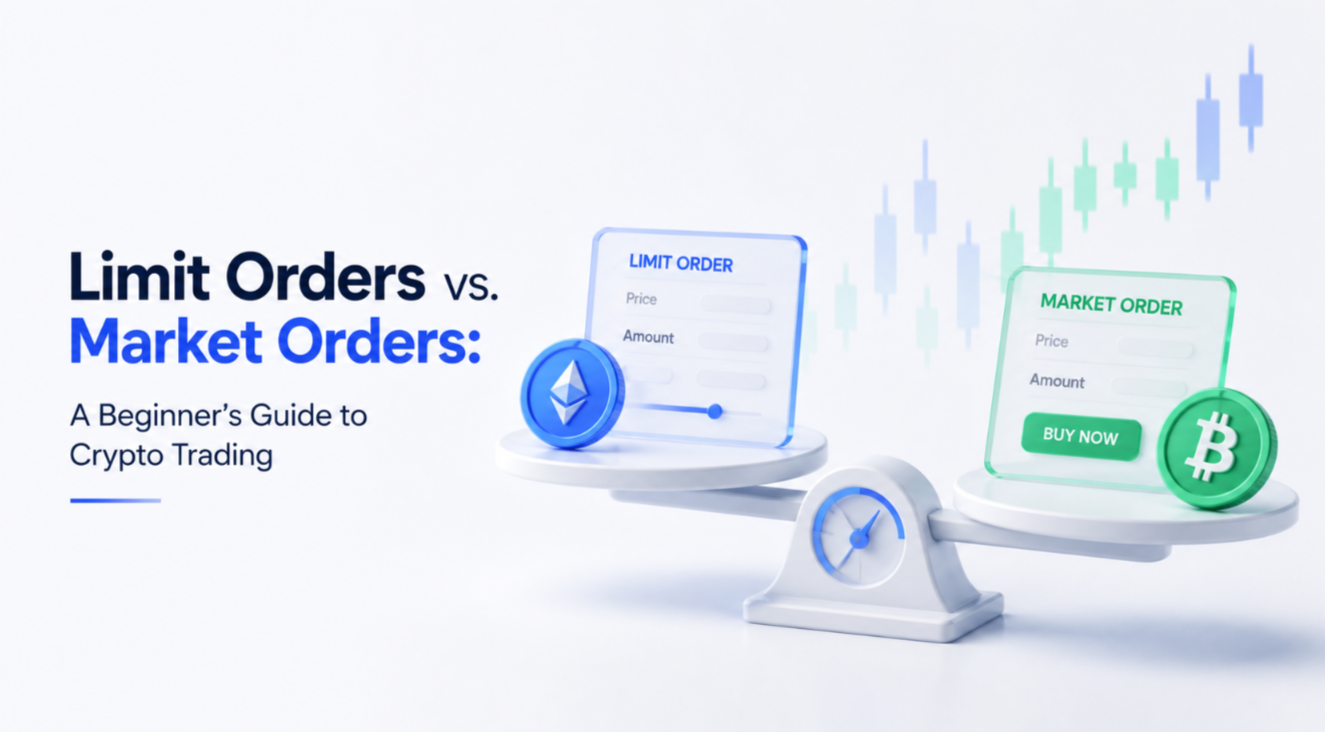
An order book needs resting orders. A limit order placed away from the current price sits in the book and waits — it makes liquidity, and the exchange rewards that with a lower fee, sometimes a rebate. A market order, or a limit order priced to execute immediately, takes liquidity off the book and pays more.
The gap is usually meaningful. A typical retail tier might be 0.10% maker and 0.20% taker on a large spot exchange, which is a doubling of cost for the convenience of instant execution. On derivatives the absolute numbers are smaller — often 0.02% maker and 0.05% taker — but the ratio is similar.
Tiers, and the window that resets
Fee schedules are stepped by rolling 30-day volume, and occasionally by the balance of the exchange's own token you hold. Two things follow.
First, the tier you see quoted in a comparison table is rarely yours. Check the schedule and find the row matching your actual monthly turnover before comparing venues, because the rank order of exchanges by cost changes between tiers.
Second, the window rolls. A month of heavy trading buys a better tier for the next thirty days; a quiet month drops you back. Traders who size around a tier boundary end up trading to hold a discount, which is the behaviour the schedule is designed to produce.
Token-based discounts deserve separate thought. Holding an exchange token to cut fees by 20–25% is a real saving funded by taking price exposure to that token. On Binance the BNB discount has been a genuine cost reduction for high-volume users for years; whether it is one for you depends on whether you would hold the token anyway.
The cost nobody prints: the spread
The difference between the best bid and the best ask is a cost you pay on every round trip, and it dwarfs the fee on anything but the deepest pairs. Buy at the ask and sell at the bid on a pair with a 0.05% spread, and you have paid 0.05% before either fee — on a pair with a 0.4% spread, you have paid eight times the taker fee.
This is why depth matters more than the fee schedule when choosing where to trade a particular pair. Kraken and Coinbase publish higher headline fees than several competitors and still deliver a better all-in cost on major pairs, because the book is tight enough that the spread costs almost nothing.
The practical test takes a minute: open the same pair on two venues, note the spread and the size available within 0.1% of mid, and compare that against the fee difference. On thin pairs the fee is a rounding error.
Getting the maker rate without missing the trade
Post-only is the setting that makes this reliable. It instructs the exchange to reject the order rather than let it execute as a taker, so you never accidentally pay the higher rate through a mispriced limit. The trade-off is that in a fast market your order is rejected and you have to reprice.
For anything that is not urgent, resting at the bid or the ask is the single largest cost saving available to a retail trader — it converts a taker fee into a maker fee and captures the spread instead of paying it. The cost is time and the risk that the market moves away.
Where the other fees hide
Three line items sit outside the trading fee. Withdrawal fees, which are set per asset and range from negligible to absurd; the same withdrawal can cost ten times more on one venue than another, and this is where exchanges that advertise zero trading fees usually recover their margin. Deposit fees on card and instant-buy routes, which frequently run 1–3% and are quoted separately from the spread applied to the conversion. And funding on perpetuals, which is a position-holding cost rather than a trading cost, covered separately in our guide on funding rates.
A working comparison
To compare two venues honestly, add: your actual tier's taker fee, half the current spread on the pair you trade, and the withdrawal fee for the asset you will move, divided by your typical position size. Do it for a real trade rather than a hypothetical one. The venue that wins on that arithmetic is frequently not the one that wins on the headline number, and it changes by pair — which is why the exchange ratings score fees and liquidity as separate criteria rather than collapsing them into one.
FAQ
What is the difference between maker and taker fees?+
A maker order rests in the order book and adds liquidity, earning a lower fee or occasionally a rebate. A taker order executes immediately against existing orders and pays a higher fee, often double the maker rate.
How do I pay the maker fee?+
Place a limit order priced away from the current market so it rests rather than fills instantly, and enable post-only so the exchange rejects the order instead of letting it execute as a taker.
Are zero-fee exchanges actually free?+
Rarely. Zero trading fees are usually offset by wider spreads, high withdrawal fees, or a markup on the instant-buy conversion rate. Compare the all-in cost of a full round trip instead.
Does the bid-ask spread matter more than the fee?+
On thin pairs, almost always. A 0.4% spread costs more on a round trip than any retail fee tier, which is why book depth is a bigger factor in real trading cost than the published schedule.
 Dario FennDeFi & Markets Lead · DeFi protocols, yield, market structure and on-chain data