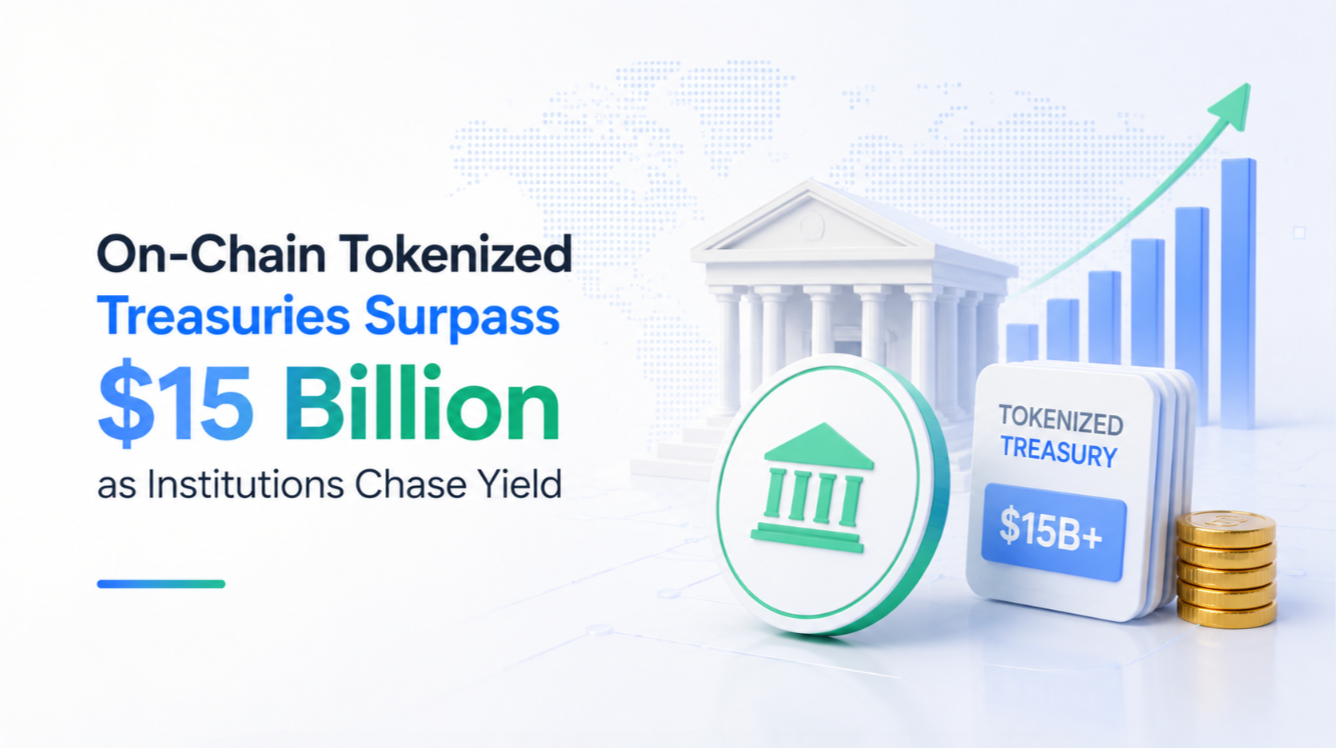
On-Chain Tokenized Treasuries Surpass $15 Billion as Institutions Chase Yield
Tokenized Treasuries have crossed $15 billion in on-chain value, with funds from BlackRock and Franklin Templeton leading a steady institutional bid that shows no sign of slowing.

Tokenized Treasuries have quietly crossed $15 billion in on-chain value, a threshold that would have sounded like a rounding error a few years ago and now represents one of the steadiest growth lines in the entire digital asset market. Unlike most crypto rallies, there's no speculative mania driving this one. It's a straightforward arbitrage: institutions want the yield on short-duration US government debt, and tokenized wrappers now offer that yield with settlement speed and composability that traditional custodians can't match.
BlackRock's BUIDL fund and Franklin Templeton's BENJI product have done most of the heavy lifting, but the growth isn't concentrated in just two names anymore. Ondo Finance, Superstate, and a widening bench of smaller issuers have all built credible distribution, and the fact that competition is intensifying rather than consolidating around one dominant player is itself a sign the category has moved past the pilot-project stage.
Why institutions are actually using this
The appeal isn't ideological. Treasury desks at trading firms and DAOs alike have idle stablecoin balances that otherwise earn nothing, and tokenized Treasuries let that cash generate a yield close to the risk-free rate without leaving the on-chain environment where it's needed for settlement. A firm running a market-making operation across several exchanges no longer has to choose between holding dead stablecoins for liquidity and parking cash off-chain for yield — it can do both in the same instrument.
Composability is the part traditional finance still underrates. Tokenized Treasury shares are increasingly usable as collateral inside DeFi lending markets, meaning the same dollar of exposure can back a loan, earn a yield, and settle near-instantly, three things a conventional money-market fund position simply cannot do at once. That layering effect is arguably a bigger driver of adoption than the yield itself.
The risks nobody's pricing in yet
The obvious one is redemption risk under stress. Most of these products still route redemptions through the issuer's off-chain banking rails, which means the "instant settlement" story holds until a genuine liquidity crunch tests whether redemptions actually clear as fast as the marketing suggests. None of these funds have been through a true stress event yet, and Treasury market volatility has a way of finding weak links in plumbing nobody stress-tested.
There's also a concentration question worth sitting with. A meaningful share of DeFi's stablecoin collateral base is now indirectly exposed to the same handful of Treasury tokenization products, which means a technical or regulatory hiccup at one large issuer could ripple into lending markets that look, on the surface, entirely unrelated to US government debt.
None of that is a reason to expect the trend to reverse. Rates staying elevated for longer than markets initially priced has made the yield differential too attractive to ignore, and the infrastructure for issuing, redeeming, and using these tokens keeps maturing month over month. The more interesting question by year-end isn't whether tokenized Treasuries keep growing — they will — but whether the next leg of growth comes from new institutional entrants or simply existing holders rolling larger balances into the category.