Ethereum's Glamsterdam Upgrade Slips to Q3 as Devnets Lock In ePBS
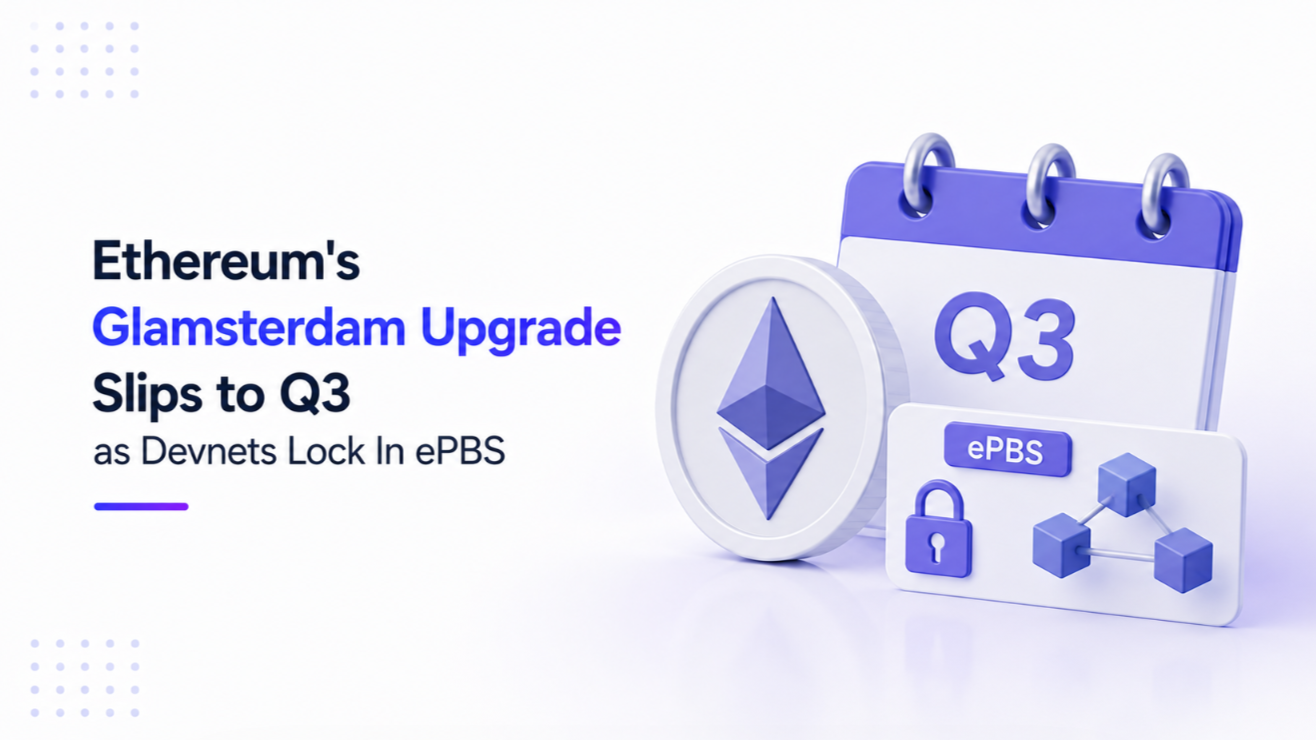
Glamsterdam has cleared its final devnet with ten EIPs locked in, but mainnet activation has moved from June to the second half of 2026. The headline changes are enshrined proposer-builder separation and block-level access lists, not the blob increase rollups were hoping for.

Ethereum's Glamsterdam hard fork is through its final devnet stage with its EIP bundle locked, and it is not shipping when the roadmap said it would. The upgrade was originally targeted for June; core developers now expect mainnet activation in the third quarter, with public testnets running first. For rollup teams who built cost models around an earlier date, that is a quarter of planning to redo.
What is actually in the bundle
Ten EIPs sit under the Glamsterdam meta proposal, and two do the structural work. EIP-7732 enshrines proposer-builder separation in the protocol, splitting the roles that MEV-Boost has handled off-chain since the Merge and shortening the window in which a proposer must have the full payload in hand. EIP-7928 adds block-level access lists, which declare in advance which state a block touches so validators can process unrelated transactions in parallel rather than strictly in sequence.
Neither is a headline a trader will care about, and both matter more than anything that has shipped since Dencun. Enshrined PBS removes a piece of trusted off-chain infrastructure from the critical path of block production. Access lists are the groundwork for parallel execution, which is the constraint that has kept Ethereum's gas limit conservative while its competitors raised theirs.
The blob question rollups keep asking
Glamsterdam does not itself double blob capacity, which is the misreading doing the rounds. What it does is widen the payload propagation window, and a wider window is what makes larger blob counts safe to schedule later. Those increases arrive through blob-parameter-only forks, which can be shipped independently of a full hard fork — the mechanism the network has been using to raise blob targets incrementally rather than waiting for the next big upgrade.
The practical effect for a rollup sequencer is that data-availability costs come down in steps rather than in one jump, and the timing of those steps is a separate decision from Glamsterdam's activation date.
The gas limit target
Alongside the fork, developers have set a 200 million gas limit as the post-upgrade floor to work toward, against a network currently operating around a fraction of that. Reaching it depends on the parallel execution that block-level access lists enable, and on validators voting the limit up in stages once client implementations prove they can keep up. Treat the number as a direction of travel rather than a date.
What to watch
Public testnet activations are the next milestone, and they are where slippage becomes visible: a fork that struggles on testnets does not reach mainnet in the same quarter. Ethereum has a long record of upgrades landing later than announced and working when they land, which is the trade the network keeps choosing.
Nothing here changes what an ordinary holder should do, which is nothing. For teams running rollups, the planning assumption for the second half of the year should be enshrined PBS and parallel-execution groundwork, with blob capacity increases arriving on their own schedule afterwards.