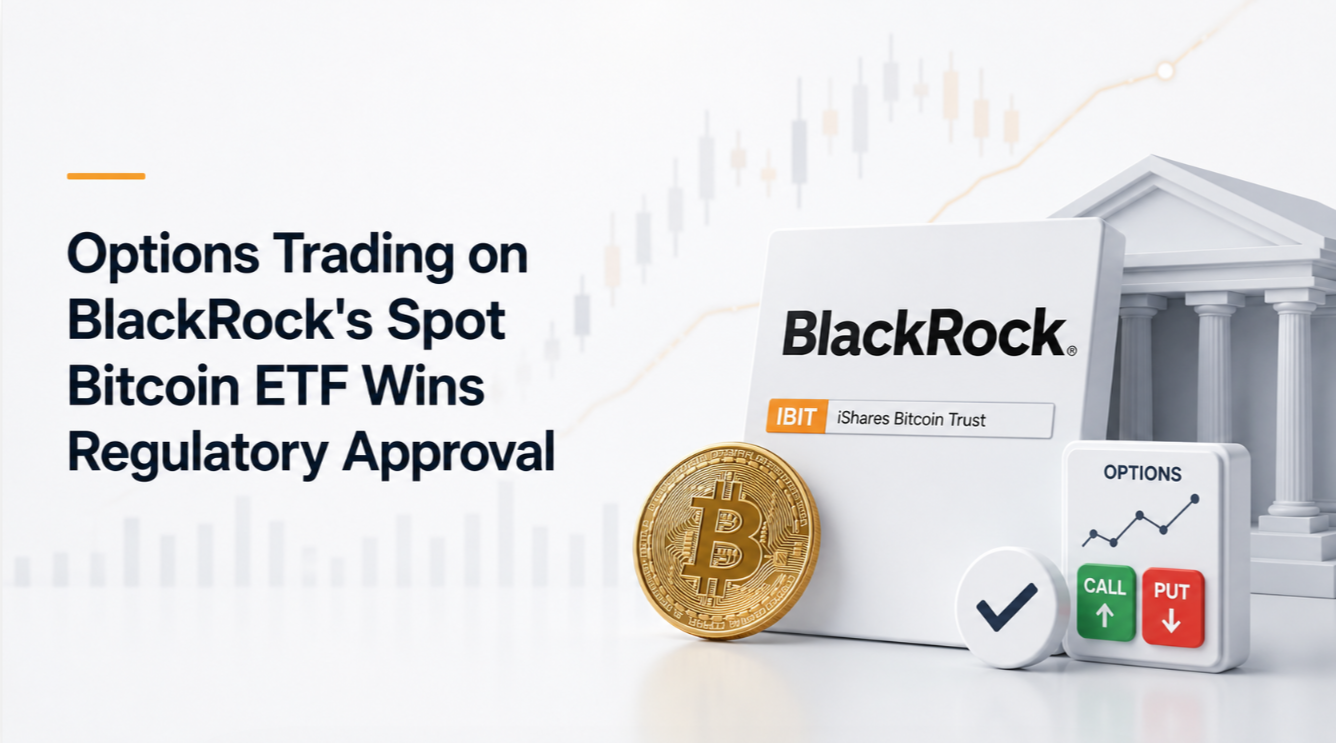
Options Trading on BlackRock's Spot Bitcoin ETF Wins Regulatory Approval
Regulators have cleared listed options on BlackRock's spot Bitcoin ETF, handing institutions a proper hedging toolkit and setting up a slow-burn shift in how the asset actually trades.

Options trading on BlackRock's spot Bitcoin ETF has cleared its last regulatory hurdle, and the listings begin this week on the exchange that has quietly become Bitcoin's most important on-ramp for pensions, endowments and macro funds that would never touch an unregulated venue. IBIT already carries more assets than gold ETFs launched a generation earlier. Giving it a functioning options market is not a footnote to that story; it is the next chapter.
Why options matter more than another ETF wrapper
Spot ETFs solved the custody problem. Options solve the positioning problem. Until now, an allocator who wanted downside protection on a Bitcoin position, or wanted to sell covered calls against it for yield, had to either go off-exchange into a thin OTC market or route through crypto-native derivatives venues that compliance desks at large asset managers generally will not approve. Listed options on a regulated ETF change that calculus overnight. A pension fund's risk committee can sign off on a collar strategy using instruments that clear through the Options Clearing Corporation, with the same plumbing it already uses for equity index hedges.
That matters because it is precisely the plumbing, not the enthusiasm, that has kept much institutional capital on the sidelines. Sophisticated allocators were never short of conviction about Bitcoin as an asset class; they were short of ways to express nuanced views on it without taking naked directional risk through a vehicle their mandate does not permit.
The volatility question nobody can answer yet
The immediate market question is what a deep, liquid options market does to realised volatility. The textbook answer is that options markets, once they reach sufficient open interest, tend to compress swings because market makers hedging their books create natural buying on dips and selling on rips — the so-called gamma-dampening effect familiar from equity indices. Bitcoin has never had this dynamic at institutional scale. If it develops here the way it did in equities, expect the wild 10% daily moves that have defined Bitcoin's trading history to become rarer, replaced by a market that grinds rather than gaps.
That is not guaranteed, and it is worth being sceptical of anyone promising it with confidence. Gamma dynamics depend on positioning skew, and if speculative call buying dominates the way it often does in retail-heavy names, options activity can just as easily amplify moves near expiry as dampen them. The early weeks will show which regime this market settles into, and dealers who mis-price that transition stand to lose real money finding out.
What changes for traders and treasuries
For corporate treasuries holding Bitcoin on balance sheet, the practical upside is straightforward: a hedging market finally exists that a CFO can defend to an audit committee. For active traders, the arrival of listed options narrows the edge that crypto-native derivatives desks have enjoyed for years, since implied volatility will now be priced in daylight rather than negotiated bilaterally. Expect basis trades between IBIT options and perpetual futures on offshore exchanges to become a cottage industry almost immediately, as quants arbitrage the pricing gap between a regulated and an unregulated venue for the same underlying risk.
The longer-run effect is structural. Every previous asset class that graduated from spot-only trading to a full options complex — gold in the 1980s, equity indices in the 1990s, oil later still — saw institutional ownership rise as a share of the total market, simply because risk management stopped being optional. Bitcoin is following the same track, several decades compressed into a few years. Whether that ultimately makes it a calmer asset or just a differently volatile one is the question this market will spend the next year answering.