















































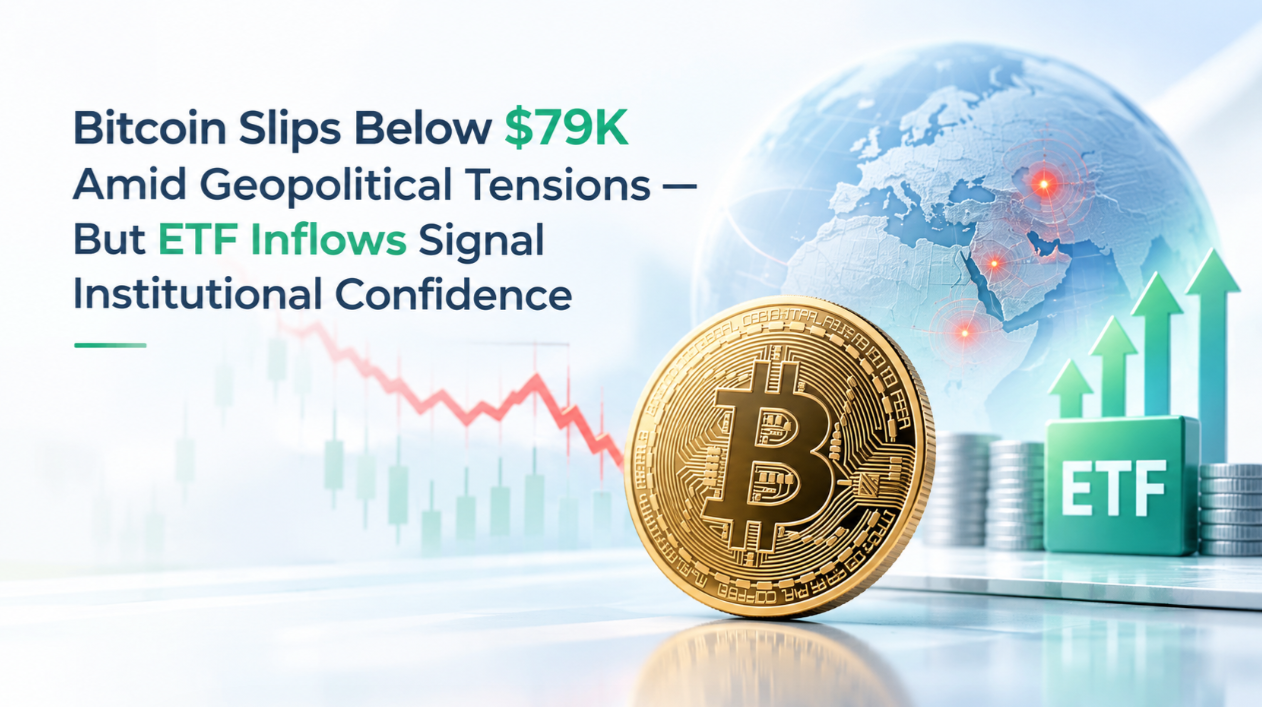
- 1Crypto Markets Pull Back as Geopolitical and Fed Pressure Mount. Cryptocurrency prices slid on Tuesday, September 8, as renewed fighting between the U.S.
- 2Institutional Buyers Keep Accumulating Despite the Dip. While retail sentiment wavers, institutional demand tells a different story.
- 3What It Means for Traders. The divergence between falling spot prices and rising ETF inflows suggests two different clocks are ticking in this market: short-term traders reacting to…
Crypto Markets Pull Back as Geopolitical and Fed Pressure Mount
Cryptocurrency prices slid on Tuesday, September 8, as renewed fighting between the U.S. and Iran, following military exchanges over the weekend, pushed oil prices back toward $100 a barrel and stoked fresh inflation concerns just a week ahead of the Federal Reserve's next policy meeting. Ethereum opened at $2,489.84, down 1% from Monday, before easing further to around $2,473.66 by mid-morning.
Bitcoin felt the pressure too. By early morning UTC, BTC traded near $78,700, down roughly 1.3% on the day, with the total crypto market capitalization slipping about 1.1% to $2.76 trillion. Analysts point to stronger-than-expected U.S. jobs data as a key driver, since it reinforced bets that the Fed will keep rates higher for longer — a shift that pushed Treasury yields up and triggered a wave of leveraged long liquidations. Markets currently price in roughly a 60% chance of a Fed rate move at next week's meeting, according to CME Group's FedWatch tool, adding another layer of caution for traders.
Despite the pullback, sentiment hasn't collapsed. The Crypto Fear and Greed Index still read 69 — firmly in "Greed" territory — only slightly below the previous day's 71, and well above last month's reading of 31.
Institutional Buyers Keep Accumulating Despite the Dip
While retail sentiment wavers, institutional demand tells a different story. Spot Bitcoin ETFs pulled in nearly $1 billion over the past week alone, extending a three-week run of $3.8 billion — the strongest stretch for the category so far in 2026. BlackRock's IBIT fund led the charge, helping push total ETF-held Bitcoin assets above the $100 billion mark.
Corporate treasuries are following the same pattern. European fintech firm Capital B added roughly $29 million in BTC to its corporate reserves, reinforcing a broader trend of companies treating Bitcoin as a treasury asset even during short-term volatility.
What It Means for Traders
The divergence between falling spot prices and rising ETF inflows suggests two different clocks are ticking in this market: short-term traders reacting to geopolitical headlines and Fed positioning, and long-term institutional allocators using dips as accumulation opportunities. With the Fed's September 15 decision now the market's next major catalyst, volatility is likely to persist — but the underlying institutional bid appears intact for now.
This story is for information only and is not financial advice. Crypto assets are volatile; do your own research before acting on anything here.
Behind the story
Understand the mechanics, then compare the services it touches.


More in Markets
All Markets →- Evernorth’s XRPN Hits Nasdaq as Bitcoin Holds Near $83,500 Before Key U.S. Inflation DataEvernorth’s XRP treasury is set to debut on Nasdaq as XRPN, while Bitcoin consolidates near $83,500 ahead of Wednesday’s U.S. CPI report and a busy week of bank earnings and Fed commentary.
- Bitcoin ETFs Bleed $244 Million as $1.19 Billion Liquidation Wave Shakes the MarketUS spot Bitcoin ETFs recorded $244 million in outflows while roughly $1.19 billion in leveraged positions were liquidated. Here is what drove the move and what traders are watching next.
- Bitcoin Slips Below $83,000 as Yields Surge, While Robinhood Adds $25M in BTCBitcoin fell below $83,000 on Wednesday as Treasury yields climbed and leveraged longs were flushed out, even as Robinhood disclosed a $25 million bitcoin position on its balance sheet.
- SEC Eases Token Buyback Concerns as Surging Treasury Yields Weigh on BitcoinThe SEC says token buybacks without a central party are unlikely to be investment contracts, while a 5%-plus Treasury yield pushes Bitcoin toward $83,000.
- Bitcoin ETFs Pull in $2.4 Billion in a Week as SEC Delays Crypto Options RulingU.S. spot Bitcoin ETFs extended their inflow streak to seven sessions even as BTC slipped toward $83,000, while the SEC pushed back its decision on crypto ETF options until mid-November.